In healthcare environments, hygiene protocols are constantly evolving in response to new research, emerging pathogens, and rising expectations for patient safety. In 2026, one topic receiving renewed attention is the hygiene management of Hospital Curtains. Long considered secondary to hard surfaces and medical equipment, curtains are now recognized as critical components of infection prevention strategies.
Hospital curtains serve an essential role in patient privacy, dignity, and spatial organization. However, they are also among the most frequently touched surfaces in clinical settings. Every interaction between staff, patients, and visitors increases the risk of contamination. Despite this, many healthcare facilities still rely on outdated or inconsistent protocols for changing and cleaning curtains.
At HAIGuard, we work closely with healthcare organizations to modernize curtain hygiene practices using evidence-based protocols that reduce infection risk while supporting operational efficiency. This guide examines how often medical curtains should really be changed in 2026, what factors influence frequency, and how facilities can establish protocols that align with today’s standards of care.
Why Hospital Curtains Deserve More Attention
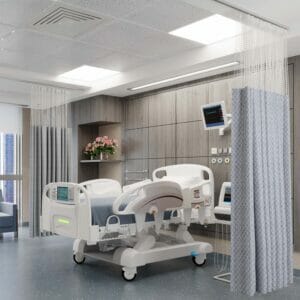
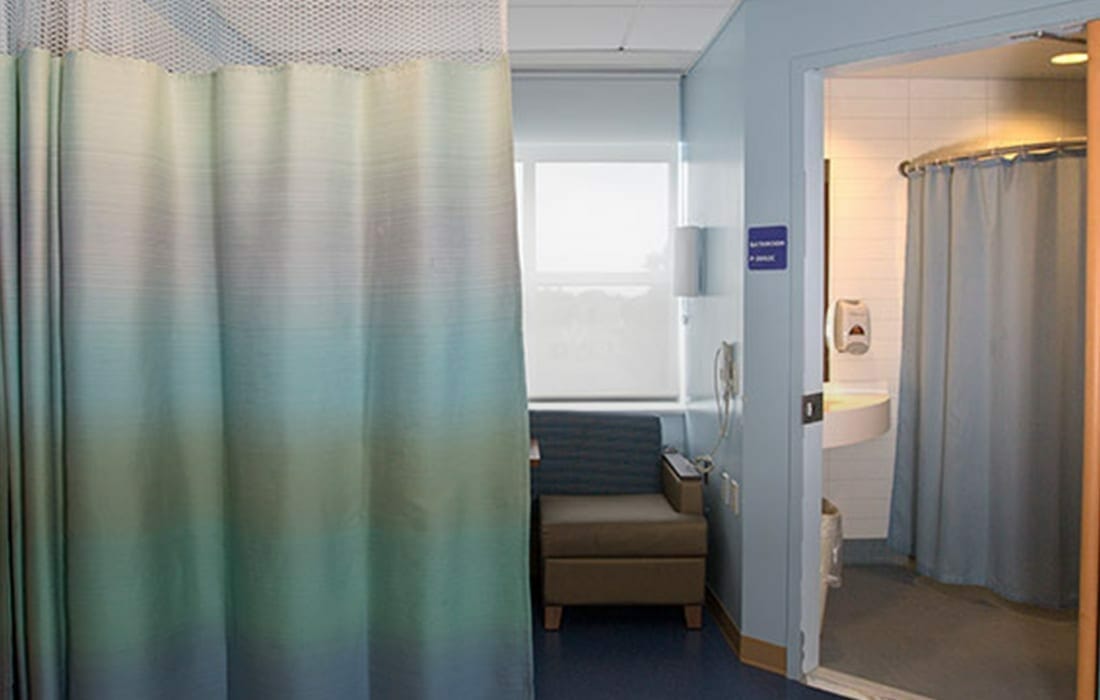
Hospital curtains are touched repeatedly throughout the day. Clinicians pull them back during examinations, nurses adjust them during care, and patients and visitors often handle them without gloves. Unlike bed rails or medical devices, curtains are rarely disinfected after every interaction.
Research has shown that pathogens can survive on fabric surfaces for extended periods. Even when curtains appear clean, they may carry bacteria, viruses, or spores capable of contributing to hospital-acquired infections. This risk is amplified in high-acuity environments where vulnerable patients are exposed to frequent clinical contact.
In 2026, infection prevention professionals increasingly view hospital curtains as environmental reservoirs that must be managed proactively rather than reactively.
What “Changing” Medical Curtains Really Means
When discussing curtain hygiene, the term “change” can be misleading. Changing curtains does not always mean replacing them entirely. In modern hygiene protocols, curtain management includes several distinct actions, each serving a different purpose.
Curtain replacement refers to removing a curtain from service and installing a freshly laundered or new one. Laundering involves cleaning curtains through approved healthcare laundry processes to remove soil and microbial contamination. Disinfection typically refers to in-place surface treatment designed to reduce pathogens without removing the curtain.
Effective hygiene protocols incorporate all three approaches, applied at different intervals depending on risk level, curtain technology, and environmental factors.
How Traditional Curtain Protocols Fall Short
Historically, many facilities relied on simple, schedule-based curtain changes. Curtains were often replaced only when visibly soiled or at fixed intervals that had little connection to infection risk. These schedules were frequently driven by convenience rather than clinical evidence.
This approach overlooks the reality that contamination is often invisible. A curtain can harbor pathogens long before stains or odors appear. As infection prevention strategies become more data-driven, facilities are recognizing the limitations of purely time-based or appearance-based protocols.
Modern hygiene standards call for curtain management that reflects actual usage patterns, patient vulnerability, and pathogen persistence.
What Research Tells Us About Curtain Contamination
Environmental studies in healthcare settings consistently demonstrate that hospital curtains can carry significant microbial loads. Contamination is most common in areas where curtains are adjusted frequently and where patient turnover is high.
Pathogens identified on curtain surfaces include multi-drug-resistant organisms, respiratory viruses, and spore-forming bacteria. These organisms can transfer from fabric to hands, gloves, or equipment, creating indirect transmission pathways that contribute to HAIs.
Importantly, contamination does not reset simply because a curtain looks clean. Without regular intervention, microbial levels can increase rapidly between laundering cycles.
How Often Should Hospital Curtains Be Changed in 2026
In 2026, leading healthcare facilities are moving away from one-size-fits-all schedules and adopting risk-based frameworks. The frequency of curtain changes should reflect the clinical environment in which they are used.
High-Risk Clinical Areas
In high-risk units such as intensive care, oncology, transplant wards, and isolation rooms, curtains should be replaced or laundered far more frequently than in general care areas. These environments involve immunocompromised patients, invasive procedures, and higher pathogen exposure.
In these settings, many facilities implement curtain laundering or replacement every two to four weeks, combined with daily disinfection and strict handling protocols. This approach minimizes environmental reservoirs and supports broader infection prevention efforts.
Moderate-Risk Patient Care Areas
Medical-surgical units and step-down units typically fall into a moderate-risk category. These areas experience frequent curtain contact but generally involve patients with lower acuity than critical care settings.
In these environments, curtain laundering or replacement every four to eight weeks is common, supplemented by routine disinfection and environmental services oversight. This balance supports safety while remaining operationally feasible.
Low-Risk and Non-Clinical Areas
Outpatient areas, administrative spaces, and low-contact environments present lower infection risk. In these settings, curtains may be replaced or laundered every eight to twelve weeks, provided that regular monitoring confirms low contamination levels.
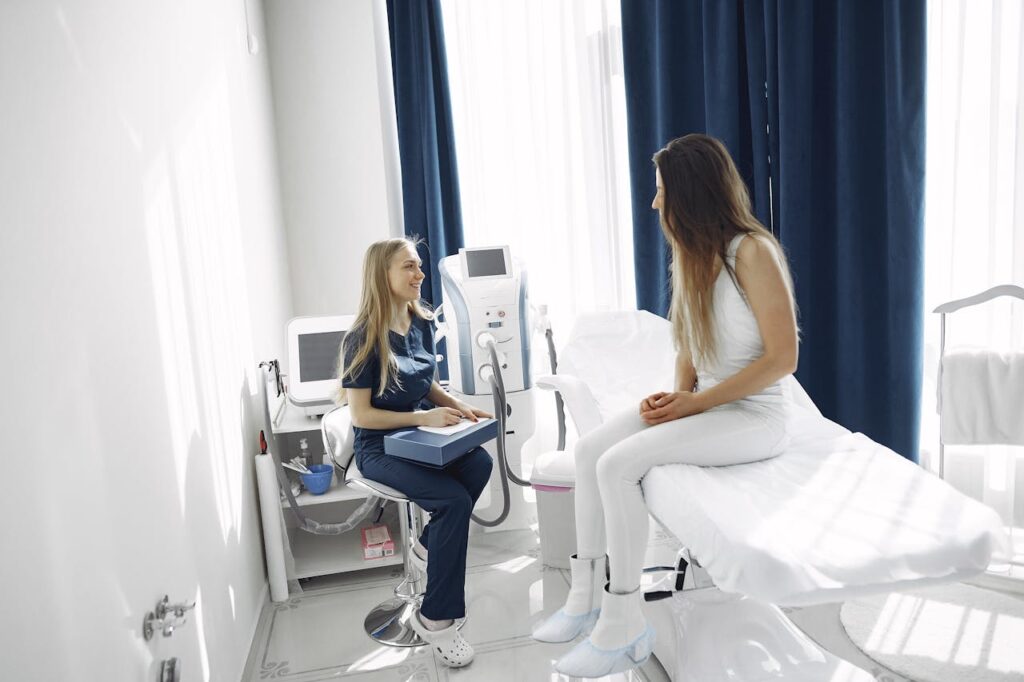
Even in low-risk areas, protocols should remain flexible and responsive to changes in patient flow or outbreak conditions.
How Curtain Technology Influences Change Frequency
Not all hospital curtains perform the same. Advances in textile technology are reshaping how facilities approach hygiene protocols.
Traditional fabric curtains tend to accumulate and retain microorganisms more readily, often requiring more frequent laundering. In contrast, curtains treated with antimicrobial or sporicidal technologies actively reduce microbial load between cleanings.
Facilities using advanced curtain technologies often base change frequency on performance data rather than arbitrary schedules. For a deeper understanding of how sporicidal innovations are redefining hygiene standards, explore THE SCIENCE OF CLEAN: WHY SPORICIDAL TREATMENTS ARE THE NEW STANDARD FOR HOSPITAL CURTAINS.
These technologies do not eliminate the need for laundering, but they allow facilities to manage risk more effectively between scheduled changes.
Monitoring Curtain Hygiene for Better Outcomes
Effective curtain protocols rely on ongoing monitoring. Without measurement, facilities cannot know whether their schedules are appropriate or effective.
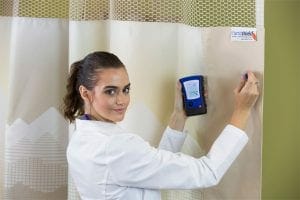
Environmental sampling programs help quantify microbial presence on curtain surfaces and identify trends over time. Visual inspections ensure that curtains remain intact, properly hung, and free from visible contamination. Touch-frequency assessments help identify areas where curtains may require more frequent intervention.
Monitoring transforms curtain hygiene from a static policy into a dynamic quality improvement process.
Curtain Hygiene as Part of a Broader Infection Prevention Strategy
Curtain management should never exist in isolation. It must align with hand hygiene programs, surface disinfection protocols, equipment cleaning, and patient isolation procedures.
When curtains are integrated into infection prevention frameworks, they reinforce other controls rather than undermining them. Reducing environmental contamination strengthens the effectiveness of hand hygiene and lowers the overall microbial burden within care spaces.
For a broader perspective on how curtain technology supports infection reduction, see BEYOND THE SURFACE: HOW ANTIMICROBIAL CURTAINS REDUCE HAI RATES IN 2026.
Staff Training and Accountability
Even the best protocol will fail without staff understanding and compliance. Environmental services teams, nursing staff, and clinical leadership all play a role in maintaining curtain hygiene.
Training should emphasize proper handling, appropriate disinfection techniques, and clear criteria for curtain removal. Documentation systems help ensure accountability and consistency across shifts and departments.
When staff understand why curtain hygiene matters, compliance improves and protocols become part of routine care culture.
Operational and Financial Considerations
Increasing the frequency of curtain changes raises legitimate operational concerns. Additional labor, laundry capacity, and inventory management must be considered.
However, these costs must be evaluated against the financial impact of HAIs. Preventing even a small number of infections can offset the expense of improved curtain hygiene through reduced length of stay, lower treatment costs, and improved reimbursement outcomes.
Facilities that adopt data-driven protocols often find that optimized schedules reduce unnecessary changes while focusing resources where they matter most.
The Future of Curtain Hygiene in Healthcare
As healthcare environments become more complex, hygiene protocols will continue to evolve. In the coming years, facilities can expect greater adoption of performance-based textiles, smarter monitoring systems, and more precise risk stratification.
Hospital curtains will increasingly be viewed not as passive furnishings, but as active components of environmental safety. Protocols will continue to shift from static schedules to adaptive systems informed by real-world data.
Setting the Right Standard in 2026
In 2026, the question is no longer whether hospital curtains should be part of infection prevention planning, but how rigorously they should be managed. Evidence shows that curtains can contribute to contamination and transmission when neglected, and that thoughtful hygiene protocols significantly reduce this risk.
By adopting risk-based schedules, leveraging advanced curtain technologies, and integrating monitoring practices, healthcare facilities can establish curtain hygiene standards that protect patients, support staff, and improve outcomes.
At HAIGuard, we help healthcare organizations move beyond outdated practices toward evidence-aligned solutions that reflect the realities of modern care. When curtain hygiene is done right, it strengthens the entire infection prevention ecosystem.