In healthcare facilities around the world, reducing Hospital-Acquired Infections (HAIs) remains a top priority. Every year, HAIs affect millions of patients and significantly increase morbidity, mortality, and healthcare costs. While rigorous hand hygiene, sterilization protocols, and environmental cleaning are widely recognized components of infection control, one often-overlooked source of microbial transmission has gained increasing attention: Hospital Curtains.
Gone are the days when curtains were simply functional room dressings. In 2026, they have evolved into active contributors to infection prevention, especially when they incorporate antimicrobial technology. At HAIGuard, we have pioneered antimicrobial curtain solutions designed to significantly decrease the microbial load on high-touch fabric surfaces and support comprehensive HAI prevention strategies.
In this exhaustive blog, we will explore how antimicrobial curtains reduce HAIs, the science behind them, implementation best practices, economic and patient-care impacts, and why they belong at the forefront of infection control planning in modern clinical environments.
The Hidden Role of Hospital Curtains in Infection Transmission
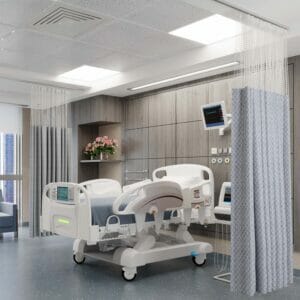
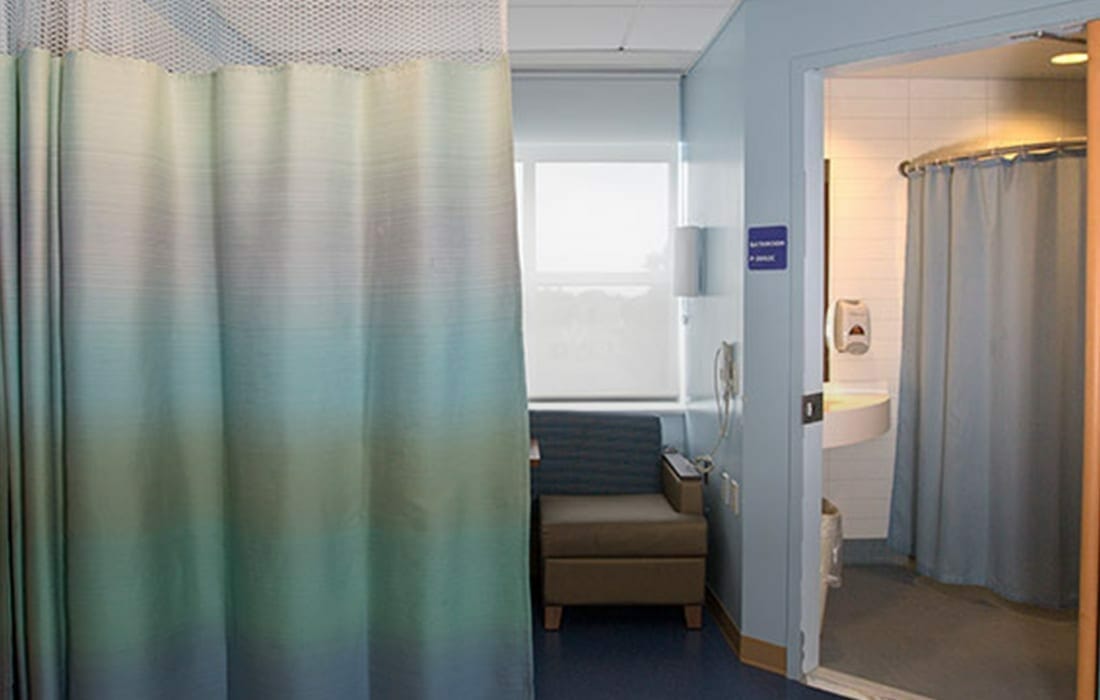
Hospital curtains are touched dozens—sometimes hundreds—of times each day by patients, clinicians, visitors, and environmental services staff. Unlike hard surfaces that are disinfected multiple times per shift, curtains are often cleaned far less frequently. This creates an ideal environment for microorganisms to persist and spread.
Studies have shown that pathogens such as MRSA, VRE, C. difficile, and certain respiratory viruses can survive on fabric surfaces for extended periods. Every interaction with a contaminated curtain creates an opportunity for indirect transmission. Even the most diligent hand hygiene programs cannot fully compensate for continuously contaminated textiles.
In modern infection control planning, Hospital Curtains are now recognized as a significant environmental risk factor—one that demands proactive solutions.
What Are Antimicrobial Hospital Curtains?
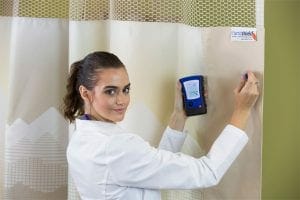
Antimicrobial hospital curtains are manufactured with advanced textile technologies that actively inhibit the growth and survival of microorganisms on the fabric surface. Unlike topical sprays or temporary coatings, antimicrobial agents are embedded directly into the fibers, allowing them to work continuously between launderings.
These agents disrupt microbial cell processes, reducing the ability of bacteria and fungi to multiply. While they do not replace routine cleaning protocols, antimicrobial curtains significantly reduce microbial load over time, creating a safer patient environment.
At HAIGuard, antimicrobial performance is not an afterthought. Our hospital curtains are engineered to balance infection prevention, durability, visual appeal, and compliance with healthcare standards.
Why Antimicrobial Curtains Matter More in 2026
Healthcare in 2026 operates under heightened expectations for safety, transparency, and accountability. Value-based care models, public reporting of infection rates, and patient satisfaction metrics all place pressure on facilities to reduce preventable harm.
Antimicrobial curtains align perfectly with these goals by:
- Reducing environmental reservoirs of pathogens
- Supporting infection prevention bundles
- Enhancing patient and staff confidence
- Improving measurable quality outcomes
Facilities are no longer asking whether they can afford antimicrobial curtains. Instead, they are asking whether they can afford not to address this risk.
The Science Behind Reduced HAI Rates
The connection between environmental contamination and HAIs is well established. Microorganisms transferred from surfaces to hands, gloves, or equipment can easily reach vulnerable patients. Antimicrobial curtains help disrupt this chain of transmission.
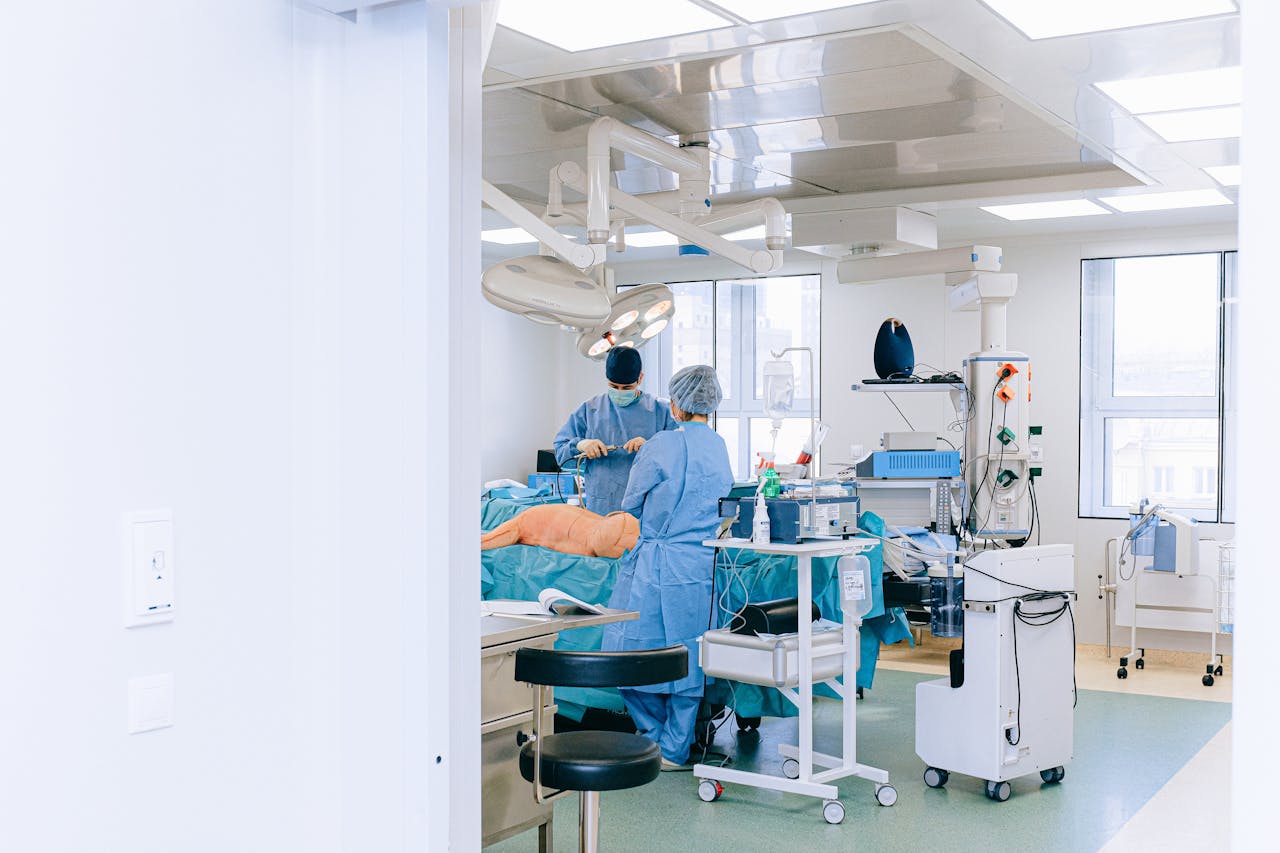
By continuously suppressing microbial growth on curtain surfaces, these products reduce the overall bioburden in patient care areas. Lower environmental contamination means fewer opportunities for cross-contamination, particularly in high-risk units such as ICUs, surgical wards, and isolation rooms.
When antimicrobial hospital curtains are integrated into a comprehensive infection control strategy, facilities often observe measurable reductions in contamination levels and, over time, declines in certain categories of HAIs.
Operational Benefits for Healthcare Facilities
Beyond infection control, antimicrobial hospital curtains deliver meaningful operational advantages.
Reduced Laundry Frequency
Because microbial growth is suppressed between cleanings, curtains may not require laundering as frequently as traditional fabric curtains. This reduces labor, water usage, and energy costs.
Extended Product Lifespan
High-quality antimicrobial fabrics are designed to withstand repeated laundering without degrading. This durability translates into fewer replacements and improved long-term value.
Workflow Efficiency
Environmental services teams benefit from clearer cleaning protocols and reduced emergency curtain changes, allowing them to focus on higher-priority tasks.
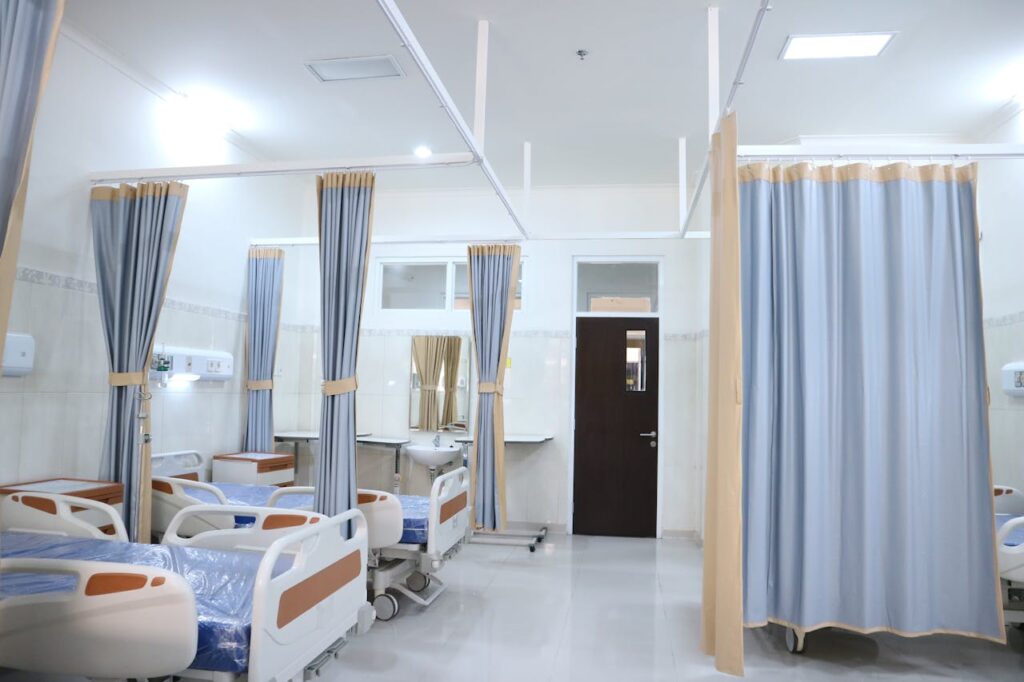
HAIGuard designs its curtain systems to integrate seamlessly into existing hospital workflows, minimizing disruption while maximizing benefit.
Enhancing Patient Experience Through Safer Design
Patients today are more informed than ever. Many actively evaluate cleanliness and safety when choosing healthcare providers. Visible investments in infection prevention—such as modern antimicrobial hospital curtains—signal a strong commitment to patient well-being.
Curtains also play a key role in patient comfort, privacy, and dignity. When combined with antimicrobial protection, they become part of a holistic approach to care quality.
To better understand how curtain quality affects perception and outcomes, explore THE 2026 PATIENT EXPERIENCE: HOW HIGH-QUALITY PRIVACY CURTAINS MAKE A DIFFERENCE.
Supporting Healthcare Staff and Clinical Teams
Healthcare workers face constant exposure to potential pathogens. Antimicrobial curtains help reduce environmental risks, creating safer workspaces and supporting staff confidence.
When clinicians know that their environment is designed with infection prevention in mind, it reinforces organizational culture and supports compliance with broader safety initiatives. This can have a positive impact on morale, retention, and overall performance.
Compliance, Accreditation, and Risk Management
Regulatory bodies increasingly evaluate environmental infection control as part of accreditation and compliance processes. While no single product guarantees compliance, antimicrobial curtains demonstrate proactive risk management and alignment with best practices.
Facilities using HAIGuard antimicrobial hospital curtains often find it easier to document environmental controls, support audits, and respond to infection prevention inquiries.
Selecting the Right Hospital Curtains
Not all antimicrobial curtains are created equal. When evaluating options, healthcare leaders should consider:
- Verified antimicrobial efficacy
- Durability through repeated laundering
- Compatibility with existing curtain tracking systems
- Fire safety and healthcare compliance standards
- Manufacturer support and expertise
HAIGuard works closely with healthcare organizations to ensure that curtain solutions meet both clinical and operational needs.
Modern Standards and the Future of Hospital Curtains
The role of hospital curtains has evolved dramatically. No longer passive furnishings, they are now active components of infection prevention and patient experience strategies.
As standards continue to rise, facilities are rethinking material choices, design specifications, and performance expectations. For additional insight into these evolving expectations, review NEW YEAR, NEW STANDARDS: HOW MODERN HOSPITAL CURTAINS IMPROVE PATIENT CARE.
A Strategic Investment in Safer Care
Antimicrobial hospital curtains represent a smart, evidence-based investment in patient safety. They address a known risk area, support infection prevention goals, and contribute to operational efficiency without disrupting care delivery.
At HAIGuard, our mission is to help healthcare facilities reduce HAIs through innovative, reliable, and thoughtfully designed curtain solutions. By focusing on both performance and practicality, we support hospitals in delivering safer, higher-quality care.
Reducing HAIs requires attention to every detail of the care environment—including those that were once overlooked. In 2026, Hospital Curtains are recognized as critical touchpoints that influence infection risk, patient perception, and operational outcomes.
Antimicrobial curtains go beyond surface-level protection. They actively support safer healthcare environments, reinforce infection prevention strategies, and align with the evolving standards of modern care.
With HAIGuard antimicrobial hospital curtains, healthcare facilities can move confidently toward a future where safety, quality, and patient trust are built into every detail.